 Balanced Brew Guide
Four categories people usually mean by “alternative”
| Option | Why someone might choose it | Evidence context |
|---|---|---|
| Gluco Cleanse Tea | Convenient 19-ingredient tea blend and simple ritual. | No product-specific clinical trial found; individual herbs have mixed/limited evidence. |
| Single-herb tea | Lower cost, simpler ingredient list, easier to identify tolerance. | Evidence depends on the herb and preparation; tea strength may differ from research doses. |
| Capsule supplement | More standardized dosing is sometimes available. | Still a supplement; quality, evidence and interactions vary by product. |
| Established diabetes care | Targets diagnosed disease with monitoring, lifestyle planning and medicines when needed. | Supported by clinical guidelines and public-health agencies; not replaceable by a tea. |
If you mainly want a tea ritual
A plain cinnamon, ginger, green or other unsweetened tea may be cheaper and simpler. The tradeoff is that you do not get the all-in-one blend. If you value convenience more than formula simplicity, Gluco Cleanse Tea may fit that preference.
If you mainly want better glucose control
That is a medical goal rather than a product-format preference. NIDDK and CDC emphasize food patterns, physical activity, monitoring and medicines as appropriate to the individual. A supplement can be discussed as an adjunct, but it should not displace the care plan.
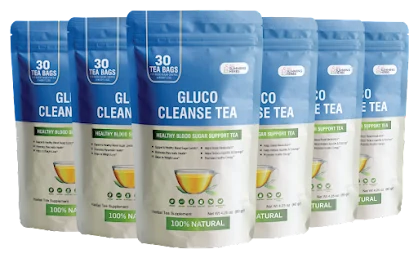
Merchant offer
Compare the merchant's current blend and offer
Use the merchant page to verify the latest package, price, shipping and guarantee terms before ordering.
Affiliate disclosure: we may earn a commission if you purchase through this link, at no extra cost to you.
How to compare any blood-sugar supplement
- Look for exact ingredient amounts rather than only a long ingredient list.
- Ask whether the finished formula—not just ingredients—has human trial evidence.
- Check interaction risks with your current medicines.
- Separate structure/function marketing from disease-treatment claims.
- Compare total monthly cost and refund terms.
Sources used for this page
- NCCIH — Diabetes and Dietary Supplements — Summarizes evidence and safety issues for herbal supplements used by people with diabetes.
- NIDDK — Type 2 Diabetes — Evidence-based overview of type 2 diabetes and established management approaches.
- CDC — Living with Diabetes — Practical guidance on food, activity, monitoring and prescribed medicines.
- FDA — Questions and Answers on Dietary Supplements — Explains that supplements are not pre-approved to treat disease and that disease-treatment claims are regulated as drug claims.